
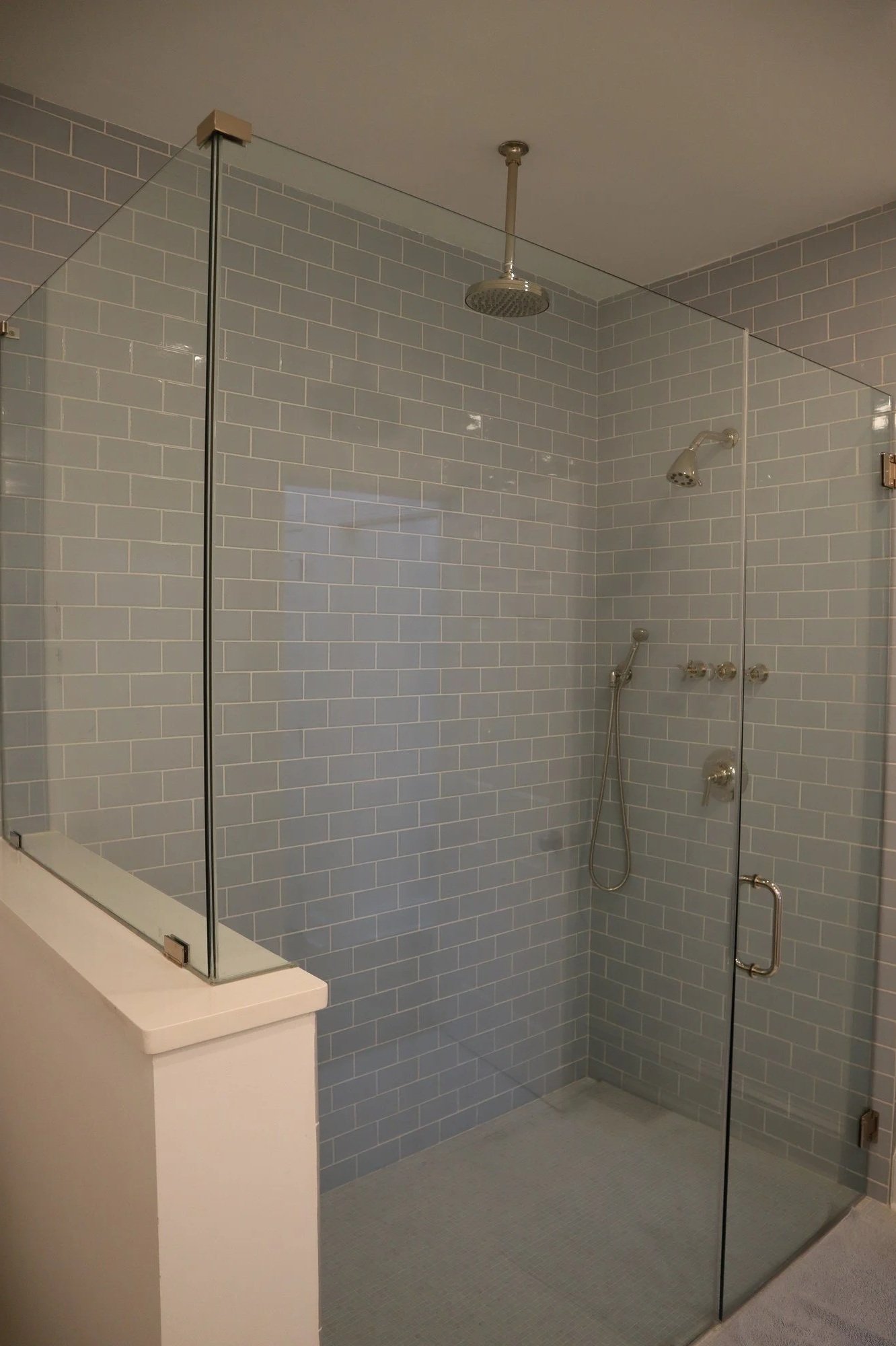
Bathroom Remodeling in Charlotte, NC
Custom tubs, showers, tile, and vanities, designed and built by Bottom Line Renovations for Charlotte-area homeowners.
Bottom Line Renovations handles the full range of bathroom remodeling, from tub-to-shower conversions and custom tile work to new vanities, fixtures, lighting, and layout updates. Every project is designed and built around your space and how you use it.
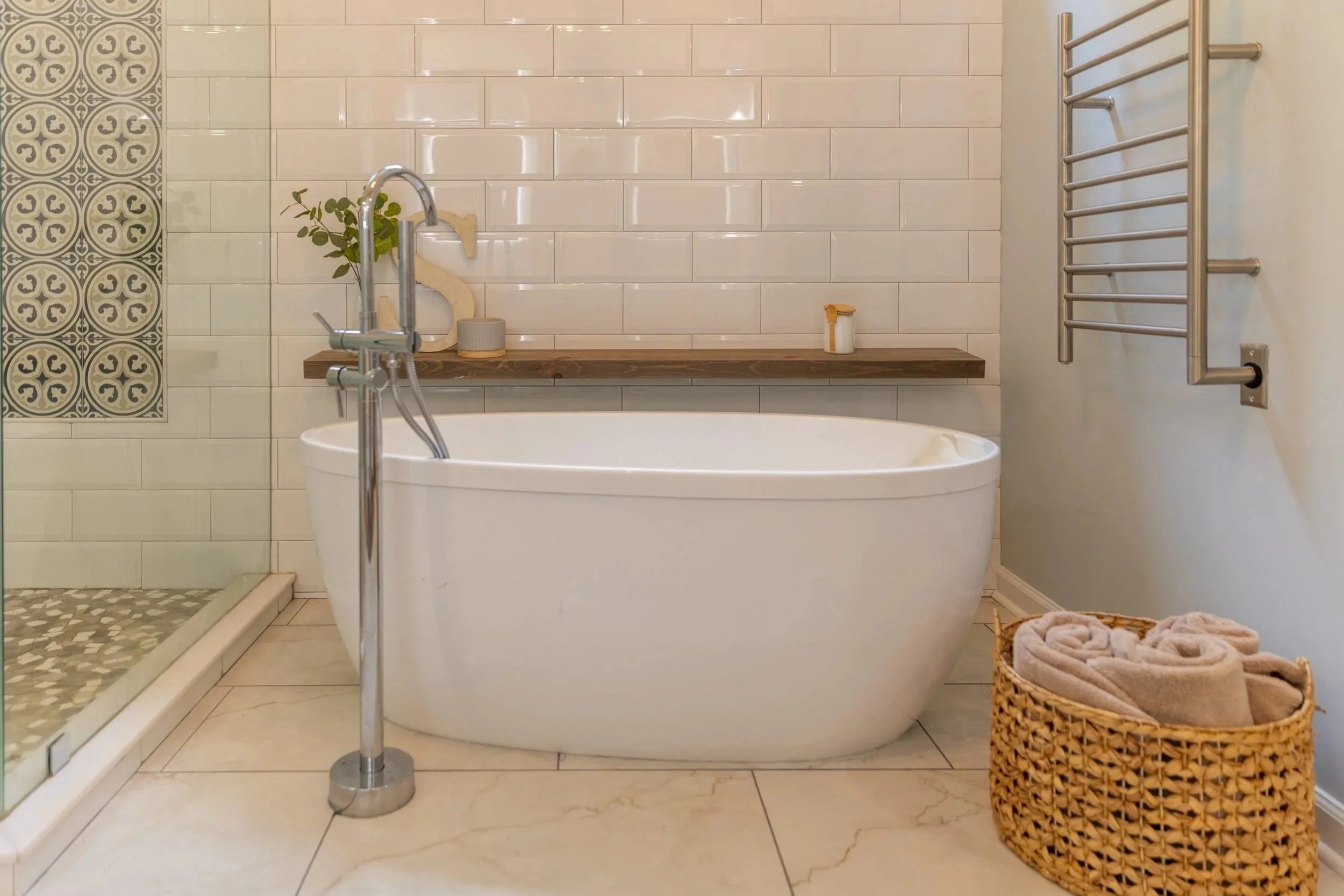
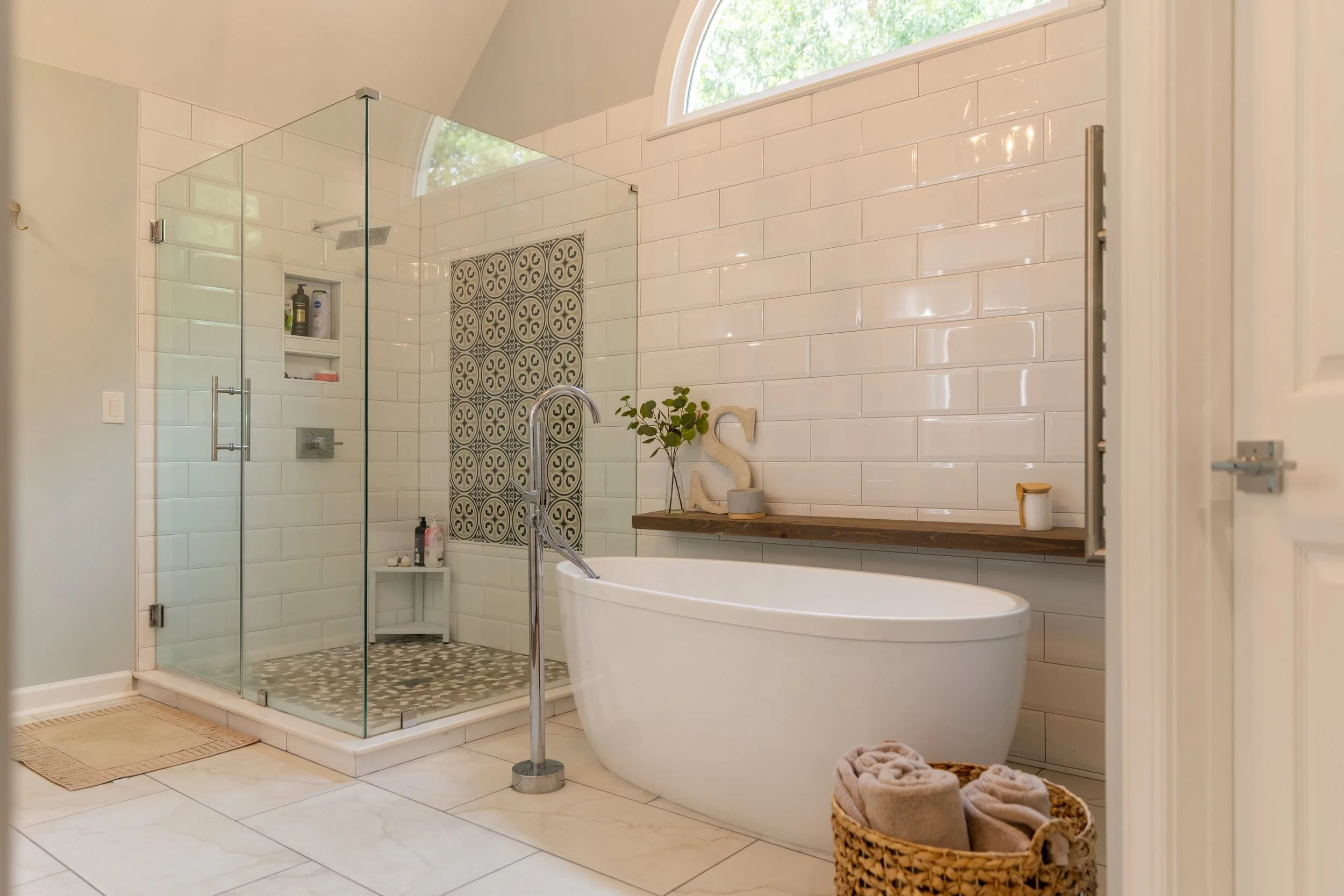
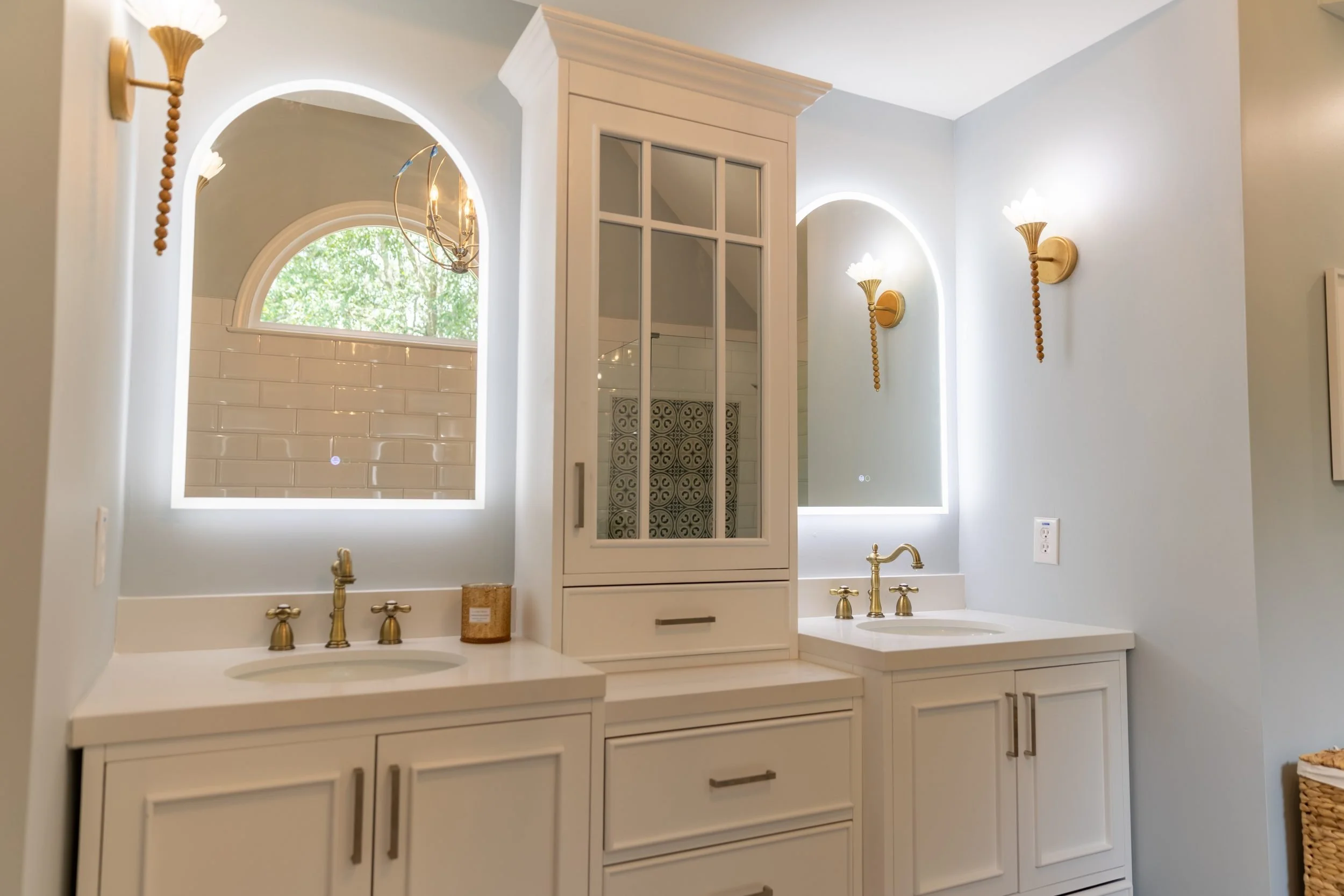
“Honest, efficient, knowledgeable, friendly, fair price, clean, expert, strong communication. Would recommend to family and friends. Had some issues with water in our bathroom shower tile floor, rather than replacing tile which would have only temporarily fixed the issue, he suggested a better solution…”
— Douglas O., bathroom and windows
The Bathroom Remodeling Process
Every bathroom project starts with design: measuring the space, discussing how the household uses it day to day, and mapping a layout for the vanity, shower or tub, and storage that fits the budget. Once the layout is set, work typically moves through demolition, structural and plumbing rough-in, waterproofing, tile setting, then vanity, fixture, and lighting installation, followed by trim, paint, and final fixtures. A single point of contact manages each phase so scheduling, material deliveries, and trade coordination stay on track from demo day to final walkthrough.
Tile, Vanity, and Shower Options
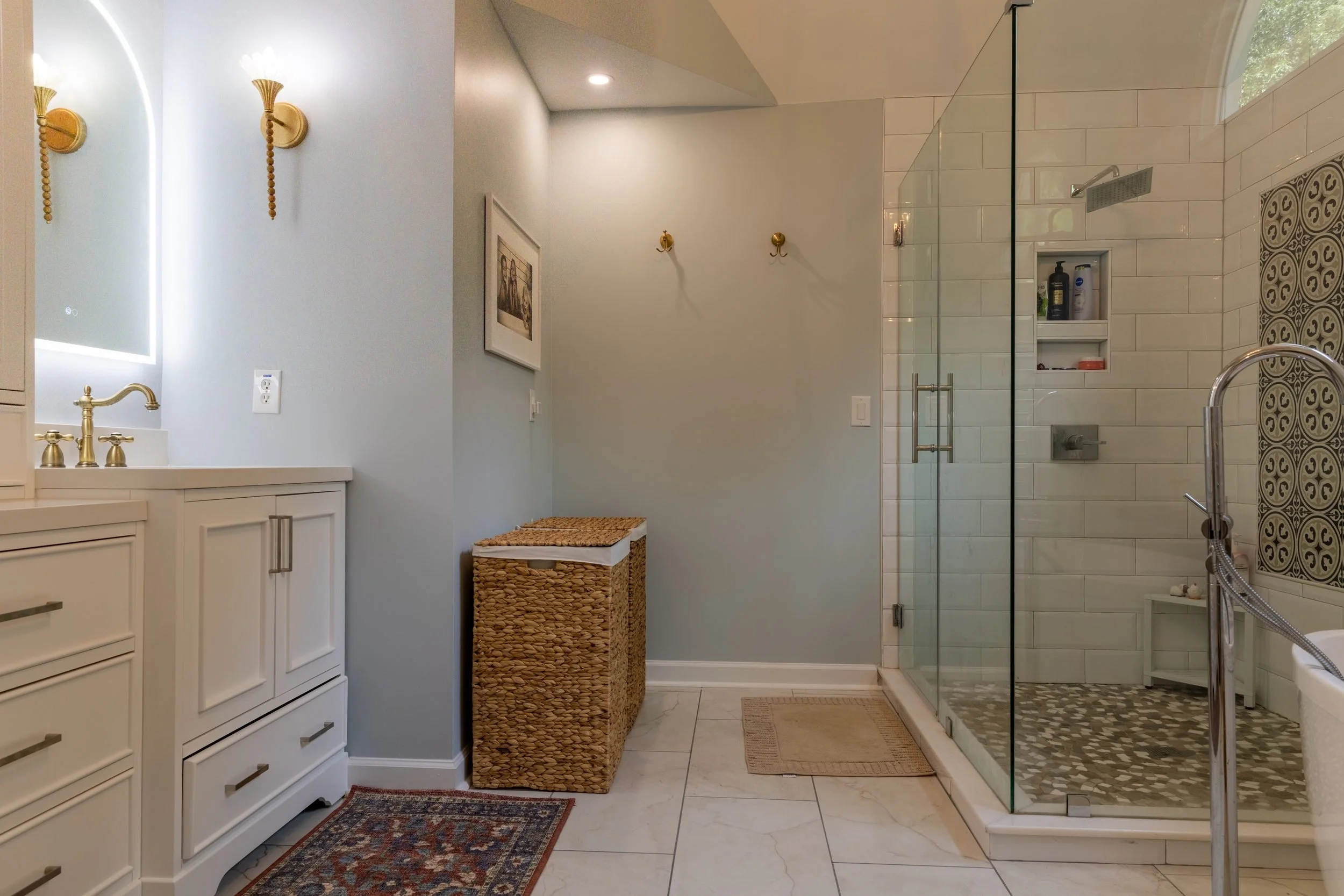
Tile is usually the defining material choice in a bathroom. Porcelain tile is durable, low-maintenance, and available in finishes that mimic natural stone at a lower cost, which makes it the most common choice for showers and floors. Natural stone, such as marble or travertine, has a look no porcelain fully replicates, but it is more porous and generally requires periodic sealing.
Vanities follow a similar semi-custom versus full-custom tradeoff as kitchen cabinetry: semi-custom vanities use manufacturer-standard sizes and finishes with a shorter lead time, while full-custom vanities are built to the exact dimensions of the space, which matters most in primary baths with an unusual footprint or a floating vanity design. Shower systems range from a standard alcove shower to a curbless, fully tiled walk-in shower, which requires more structural and waterproofing work but is increasingly requested in primary suite renovations.
Structural and Mechanical Considerations
Tub-to-shower conversions and primary suite expansions often involve relocating plumbing, which means moving supply and drain lines under the slab or through the floor structure, depending on the home’s foundation type. Every wet area also needs a waterproofing membrane behind the tile, not just grout sealant, since grout alone is not waterproof. Bathrooms require mechanical ventilation sized to the room, and if a window is being added or moved for a larger shower, that becomes part of the structural and permitting scope as well.
Permits and Mecklenburg County Requirements
Most bathroom remodels in Charlotte and Mecklenburg County require permits once the scope goes beyond a cosmetic refresh, specifically any project that touches plumbing, electrical circuits, or structural framing. Permitting and inspections for renovations in Charlotte and Mecklenburg County are handled through the County’s Land Use and Environmental Services Agency (LUESA), which reviews plans and schedules inspections at each stage of construction, including rough-in and final. Homes in an HOA may also require separate architectural approval before permits are pulled, particularly for any exterior changes like a moved window. Review timelines vary with project scope and the County’s current workload, so permit lead time is factored into the overall project schedule during planning rather than left as a surprise once construction starts.
Timeline and Investment
Bathroom remodels with Bottom Line Renovations generally fall between $70,000 and $130,000, the same investment tier as a kitchen remodel, with the range driven mainly by tile and vanity choice, shower system complexity, and whether plumbing is being relocated. A bathroom that keeps its existing footprint and fixture locations sits toward the lower end of that range and moves faster through construction. A bathroom that involves relocating plumbing, expanding the footprint, or converting to a curbless shower sits toward the higher end and takes longer, both because there is more construction and because it requires more permitting and inspection steps along the way.
Frequently Asked Questions
-
Most bathroom remodels fall between $70,000 and $130,000, depending on tile and vanity choice, shower system complexity, and whether plumbing is being relocated.
-
Yes, most bathroom remodels require permits once the scope goes beyond a cosmetic refresh, specifically anything touching plumbing, electrical, or structural framing.
-
Porcelain is durable, low-maintenance, and mimics natural stone at a lower cost. Natural stone like marble or travertine has a unique look but is more porous and requires periodic sealing.
-
Timeline depends on scope. Projects that keep the existing footprint move faster, while relocating plumbing or converting to a curbless shower adds time for construction and permitting.